The power of alignment: Conceptualizing strategy-identity alignment in Dutch energy companies

Stephanie Koornneef & Stefan Breet
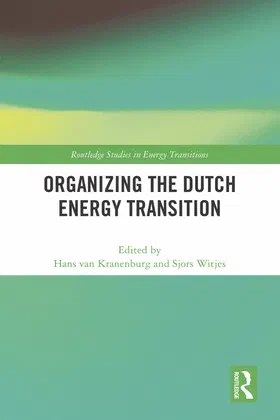
In Organizing the Dutch Energy Transition · Routledge · 2024
The Dutch energy transition confronts energy companies with major challenges: they need to reevaluate both their strategy (what they do) and their identity (who they are). When strategy and identity are not aligned, renewal and change often fail.
In this chapter, we develop the strategy-identity matrix, a framework that distinguishes four forms of alignment. Illusionists pursue an entrepreneurial strategy with a traditional identity. Custodians combine a conservative strategy with a traditional identity. Pioneers connect an entrepreneurial strategy with an innovative identity. Reformists, finally, pursue a conservative strategy with an innovative identity. By applying this framework to Dutch energy companies, we show how organizations can align or misalign their strategies and identities in different ways, and what the consequences are when they fail to do so.
Academic Abstract
The Dutch energy transition creates significant challenges for energy companies in the Netherlands because they need to reevaluate their strategies (what they do) and identities (who they are). They are required to explore new and sustainable sources of energy, as well as efficiently exploiting old sources of energy. The energy transition also prompts a reevaluation of what defines an energy company. When strategy and identity are not aligned, strategic renewal and organizational change are deemed to fail. To better understand the alignment between strategy and identity and its consequences for Dutch energy companies, this chapter develops a theoretical framework based on the extent to which organizations engage in entrepreneurial or conservative strategies and maintain innovative or traditional identities. The strategy-identity matrix identifies four distinct forms of strategy-identity alignment: illusionists, custodians, pioneers, and reformists. By using this framework to classify the strategy-identity alignment of Dutch energy companies, this chapter shows that organizations can align or misalign their strategies and identities in different ways. We discuss the implications of the strategy-identity matrix for theory, practice, and the Dutch energy transition.
Reference
Related Posts

JBR Special Issue Paper Development Workshop
This paper development workshop is designed for researchers interested in submitting their work to the upcoming special issue on NCA in strategy, innovation, and entrepeneurship research that will be published in the Journal of Business Research.

Business Model Innovation
This course teaches master students how to redesign an organization’s business model and make it future proof.
Call for Papers: Using Necessary Condition Analysis (NCA) to Advance Strategy, Innovation, and Entrepreneurship Research
We invite papers for a virtual special issue in the Journal of Business Research.